


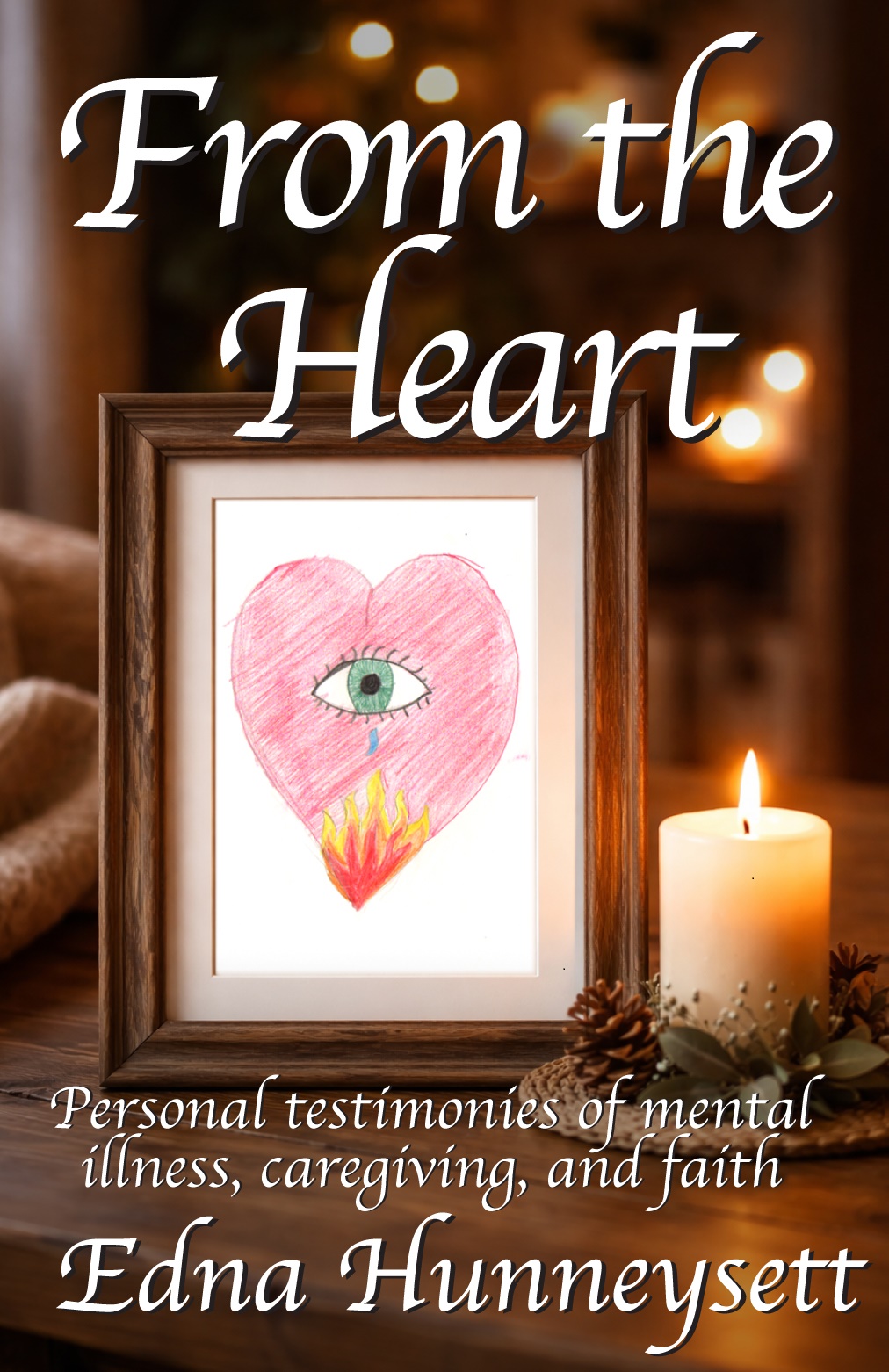
Since the pandemic, research undertaken by the charity ‘Mind’ suggests that around one third of adults and young people say that they have experienced some sort of decline in their mental health since March 2020. Edna Hunneysett, a parishioner and Reader in the Holy Name of Mary Parish in Middlesbrough is reissuing her three books giving a voice to those caring for loved ones with mental illnesses as well as giving people struggling with their mental health the opportunity to tell of their own experiences in poems and stories.
It is said that ‘mental illness does not know denominational divisions’. As a Catholic, Edna drew on her own experiences of finding spiritual and pastoral support whilst caring for a young person suffering from severe mental illness, establishing and guiding a pastoral care group for carers – and later a group for sufferers themselves. Her books, published several years ago, tells their stories and has been described as ‘a book of hope and empowerment.’
When originally published, the then Bishop Richard Moth (now the Archbishop of Westminster), was the lead Bishop for the short-term Mental Health Project (2010 – 2012), which the Catholic Bishops’ Conference of England and Wales (CBCEW) established to encourage and inspire us as communities of understanding. His endorsement reads:
‘This book provides valuable insight into the lives of those who live with difficulties in mental health and those who care for them. Its approach gives people a voice – an opportunity to share with others the challenges and joys they face on the journey to recovery. Its publication is timely, coming amid growing interest in mental health issues across England and Wales. We must be grateful to Edna Hunneysett for her commitment to the sphere of mental health and for all the work that has gone into this book. We journey towards a time when mental health issues are better understood, and I commend this book as a welcome contribution to that journey.’
Prof. John Swinton, Professor in Practical Theology and Pastoral Care at King’s College University of Aberdeen has also reviewed From the Heart and writes:
‘Stories are important. In a real sense, we only know who we are because of the stories that we tell, about one another, and the stories that others tell, about us. When we want to communicate who we are, we tell stories about ourselves. When we try to describe other people, we tell stories about them. Stories provide the fabric that shapes who we are and how we see the world.
But what kind of stories do we relate about mental illness? The sad truth is that the stories we choose to tell, about mental illness, are often tragic, bizarre, frightening and sometimes quite dehumanising. Above all else, they are very often untrue. Normally, when someone tells a story about us that is untrue, we respond with a counter-story that corrects the untruth. But if we have a diagnosis of mental illness, people are much less likely to listen to our counter-story. So we end up being defined by other people’s stories, and this is a precarious place to be.
Edna Hunneysett wants to change that. She wants us all to hear the stories of people with mental illness and to allow these stories to change us. In this book, she has gathered a new set of stories about mental illness that emerge directly from people’s experiences. Stories which enlighten; stories which challenge and move us; and stories that change the way we see mental illness and perhaps the way we see all of our lives. If we listen carefully to the stories and poems gathered in this book, we will hear new voices.
As we listen to and, more importantly, as we hear these voices, those whom we have chosen to call “mentally ill’” will be enabled to tell their stories well and, in telling their stories well, reclaim a vital voice within our understanding. This book will make a difference.’


Recent Comments